Just How Team Therapy Improves Addiction Treatment in Texas
Recovery in Texas rarely takes place alone. We are a state of long drives and longer conversations, villages where everyone recognizes your people and large cities where you can vanish if you want to. Group treatment bridges those globes. It provides framework and skill structure, but it additionally supplies something definitely Texan, a feeling of belonging that maintains people returning. When I think of what really moves the needle in addiction treatment, specifically in position like San Antonio, the Rio Grande Valley, and the Panhandle, team work rests at the center of the change.
Why group treatment improves outcomes
Addiction prospers in secrecy. Group therapy breaks that pattern. The very first time a customer claims, I thought I was the only one who did that, and sees half the space nod, pity loses its grip. Shame drives regression greater than most activates people name. In a well-led team, peers normalize the fear and the errors, after that hold each various other to account. That combination, acceptance and liability, is hard to replicate in private sessions alone.
There is a useful dimension also. One therapist can work with 8 or ten individuals simultaneously, which stretches resources without undervaluing the job. That matters in rural areas where accredited clinicians are limited, and it matters in cities where expense, childcare, or job timetables obstruct access. Group treatment helps programs in Texas meet a high quantity of need while delivering meaningful care.
From years of promoting, I see several regular advantages. Individuals find out to give and receive comments without falling down into defensiveness. They exercise real-time coping abilities in a little social environment, after that check those abilities at home or job. They take in information faster when it originates from both a medical professional and a peer that has actually tried the strategy under stress. And they build an assistance network that lasts long after discharge. When the heat index strikes 105 in August and stress and anxiety spikes on a jobsite, having three numbers in your phone you can call at lunch can be the difference between white-knuckling and a constructive plan.
The Texas context: geography, society, and access
Addiction therapy in Texas is formed by range, culture, and systems of care that vary by region. A Person in San Antonio could have access to multiple healthcare facility systems, the VA, university-affiliated clinics, and loads of healing neighborhood conferences every evening. A breeder outside Uvalde or a rig worker in the Permian Container does not. Group therapy becomes a cornerstone for both, just made use of differently.
Texas has a big veteran populace, heavy in San Antonio. Groups for professionals, or combined teams that masterfully incorporate military culture, address ethical injury, hypervigilance, and the limited league that can make private therapy feeling sterilized. We likewise have multilingual communities where Spanish-language teams reduce barriers dramatically. When a mother from Laredo can refine cravings in her mother tongue, including the subtlety of household responsibilities, the job reaches her in such a way translations cannot.
Faith is another dimension. Numerous Texans want area in the group to talk about spiritual sources without really feeling pressed into a teaching. Competent facilitators set a tone that welcomes faith-informed coping while safeguarding those that do not connect to it. That equilibrium matters.
The legal system additionally intersects with therapy regularly. Medication courts in Bexar County and various other jurisdictions refer people to extensive outpatient programs that rely upon team therapy sessions a number of nights a week. Effectively dealt with, court participation can include framework without transforming the team right into a box-checking exercise.
Where team therapy suits the continuum of care
Addiction treatment seldom follows a straight line. Individuals relocate through degrees of care based upon clinical demand, risk, and logistics. Group therapy has a role at each stage.
Detox and medically handled withdrawal are largely medical. Also there, short psychoeducational teams help people recognize what is happening to their bodies and minds. In residential programs, everyday teams end up being the backbone of treatment. Customers attend psychoeducation in the early morning, a procedure team after lunch, possibly a regression prevention group before supper. The strength provides momentum.
Partial a hospital stay and intensive outpatient treatment depend greatly on groups. A normal intensive outpatient program in Texas could run three nights a week, three hours per session, with a mix of ability structure and procedure time. Individuals work throughout the day, involved group, and use what they discover to genuine stressors in actual time. Aftercare groups supply a lighter touch, typically once a week, concentrated on relapse prevention, life changes, and remaining connected.
Peer-led conferences complement, yet do not replace, clinical group treatment. Twelve Step fellowships, SMART Recovery, and faith-based conferences are available throughout much of the state, with denser alternatives in metros like San Antonio, Austin, Houston, and Dallas. An ideal method I recommend is to couple a clinical team with at the very least one weekly peer conference. The clinical team provides evidence-based devices and an accredited facilitator. The peer meeting increases the network and adds lived experience.
Common group formats that work
A good program rarely uses just one kind of team. Variety satisfies individuals where they are and keeps the work appropriate as they support. The complying with formats turn up commonly in reliable addiction treatment Texas programs:
- Psychoeducational groups that clarify addiction neurobiology, withdrawal timelines, medication choices, and the auto mechanics of craving and reward.
- Skills groups that show concrete devices such as desire surfing, managing risky situations, and communication techniques for limit setup at the office and home.
- Process groups where members talk about existing battles, offer and obtain feedback, and practice susceptability with clear ground rules.
- Relapse avoidance groups that map triggers, construct layered strategies, and practice what to do after a slip so one drink or one tablet does not develop into a full go back to use.
- Family or partners groups that orient enjoyed ones, show encouraging feedbacks, and align expectations about personal privacy, safety, and accountability.
In bigger centers, you will certainly likewise see trauma-informed teams, sorrow job, medicine support groups for those on buprenorphine or naltrexone, and specific teams for teens, veterans, or initial responders.
What actually happens in the room
People that have actually not been in team treatment often picture confessionals or lectures. Truth is much more organized and more practical. The facilitator sets standards on the first day: discretion, respect, no crosstalk unless welcomed, talk from your own experience, and no substances on board. In very early recuperation teams, a quick safety and security check-in opens the session. Name, sobriety date if appropriate, one win, one difficulty, one objective for the week. That 5 min rhythm establishes a pace and gives the facilitator a read on risk.
From there, a normal process segment might start with somebody explaining a near-miss on the way to H‑E‑B when a beer screen captured them off guard. One more member enters with an example from last week at a Spurs game. The facilitator overviews them to recognize thoughts, body feelings, and the option points where a various activity was feasible. The objective is not to stay in the tale, it is to exercise the skill, occasionally right there in the space with a quick role play.
Anecdotes aid ground this. A customer I will certainly call Luis was a 31 year old welder southern Side of San Antonio, working ten hour shifts, drinking hard on weekend breaks then on weeknights. What changed for him in group was not a lecture regarding dopamine. It was when one more member claimed, I put water in my tool kit and consume it like a beer on the last hour of change so my hands find out a new routine. That simple trick, plus a plan to call a peer before he transformed onto his road, obtained him with the witching hour for 3 straight weeks. Person treatment refined his plan and worked the much deeper pain. The group kept him honest.
Facilitator judgment and managing tough dynamics
Groups are living systems. They take a breath, they stall, they often go sidewards. Knowledgeable facilitators read the room like a seasoned registered nurse checks out a collection of vitals. If a single person controls, the leader instructs succinct sharing and turns to quieter participants with an invite that does not really feel like a limelight. If two participants veer right into recommendations offering, the leader redirects to interest and impact language. Cross‑talk, side conversations, and wit that cuts as opposed to connects all need quick, tranquil modification. Texas humor can be sharp. The line between alleviation and taunting matters.
Romance inside a team can derail recuperation faster than a bad day at the office. A lot of programs set a clear border: no dating or sexual connections in between current team members. Enforcing it without reproaching requires a constant hand. When a bond kinds, the leader may separate routines, relocate someone to a different track, or address it openly as part of relapse prevention.
Cultural humbleness is not optional. In blended language groups, the facilitator look for understanding, not by asking, Do you understand, but by welcoming a participant to sum up a skill in their very own words. With professionals, the leader discovers not to pathologize hypervigilance, and instead structures it as a strength that needs channeling. With oilfield routines, the leader recognizes uneven sleeps and plans dealing around night shifts.
Pairing group treatment with medication and specific work
Group therapy does not change medical care. For opioid usage disorder, buprenorphine or methadone lower mortality and enable individuals to engage in therapy. For alcohol usage disorder, naltrexone, acamprosate, or disulfiram each have roles. In technique, the most long lasting healings I see use medication when suggested, a regular individual session to take care of personal injury or intricate choice making, and 2 or 3 group sessions to practice skills with peers. That triangle holds.
It is also where regression, or the smaller sized slip that scares a person directly, obtains handled rapidly. In a well-run group, a participant can state, I utilized Saturday, and not be thrown out. The leader helps the team respond constructively. What did you find out. Who did you call. What component of the plan held. What part failed. Then a concrete following action, perhaps an added check-in or a medication testimonial. Sanctions come into play when security or honesty break, not when a person levels about a gap and recommits.
Measuring progression without turning groups into spreadsheets
Programs should track end results, but metrics can squash the human tale. One of the most valuable indications I view in team are engagement top quality, not simply presence. Are members providing specific, considerate feedback. Do they connect outdoors team for sober activities. Are objectives moving from obscure to quantifiable. Over 8 to twelve weeks, most people show enhanced rest, fewer dilemma calls, and extra stable partnerships. Yearning intensity usually goes down from daily spikes to brief, workable waves a pair times a week. If none of that is taking place by week 4, I take another look at degree of treatment, medicines, or co-occurring problems like neglected ADHD or state of mind disorders.
Telehealth teams in a state this large
Texas dimension turns telehealth from novelty to need. I have led night groups that consist of an instructor in Laredo, a nurse in Kerrville, and a truck mechanic logging in from a break area outside Waco. Telehealth increases gain access to, yet it needs tighter guideline. Cameras on, personal room, no driving, and a plan for what takes place if somebody disconnects mid crisis. Facilitators additionally learn to review microexpressions and lengthy stops briefly, then check in directly when power drops.
Insurance protection for telehealth team treatment improved throughout the pandemic and has actually stayed much more beneficial because, though plan information vary by strategy. Numerous commercial plans in Texas cover extensive outpatient telehealth if particular criteria are fulfilled. Medicaid protection for material usage solutions exists however can be limited by area and provider availability. For individuals without insurance coverage, some nonprofits and county-funded programs offer gliding range or no cost teams. The Texas Health and Human Services Payment maintains directory sites that assist, though accessibility fluctuates.
San Antonio specifics: toughness to leverage
Addiction therapy in San Antonio benefits from a couple of one-of-a-kind properties. The VA visibility is strong, with integrated psychological health and compound use groups that run evidence-based teams. The city organizes a durable network of recovery area companies that supply peer support, work coaching, and evening groups in both English and Spanish. Bexar Region's specialty courts coordinate with providers and usage groups as a central treatment, not a punishment. Due to the fact that San Antonio straddles military culture, deep household networks, and a growing tech sector, facilitators learn to switch over equipments efficiently. You can have, in the same circle, a retired master sergeant, a college student from UTSA, and a grandma elevating grandchildren. The shared language of cravings, limits, and hope attaches them more than their distinctions divide them.
If you are seeking addiction treatment in San Antonio, group availability is rich. Yet richness can bewilder. Pay attention to the high quality of assistance, not simply the variety of sessions. A jam-packed timetable led by worn out staff is less reliable than a moderate lots led by clinicians who remember your objectives and follow up when you miss.
Choosing the ideal team program in Texas
A couple of targeted concerns will certainly tell you a lot concerning program high quality and fit:
- How are groups structured throughout degrees of treatment, and how do you make a decision which track somebody enters.
- What training do your team facilitators have in addiction, trauma, and de-escalation.
- How do you manage slips or regressions revealed in group, and what is your policy on discretion breaches.
- Do you use night or telehealth groups for people who work changes, and exist Spanish-language options.
- How do you incorporate drug treatment with group therapy, and can I keep my outdoors prescriber if I have one.
If the answers are obscure, or if team appear frustrated by the questions, keep looking. The most effective programs welcome notified customers and families.
Cost, insurance, and functional barriers
Even solid motivation can not beat a shut wallet. Business insurance policy will usually cover team therapy as component of intensive outpatient or partial hospitalization if criteria are met. Deductibles and copays still attack. Some companies in Texas offer Staff member Support Programs that cover a brief collection of sessions, sometimes including groups. For those without insurance or underinsured, area sources and nonprofits can help, particularly in large regions. Smaller sized or country counties might have less choices, which is where telehealth and peer-led neighborhood teams fill gaps.
Transportation and child care sink many good intentions. Programs that comprehend Texas truths partner with rideshare coupons, coordinate with probation schedules, and deal child-friendly hours. I have actually viewed attendance double when a program moves one track from 5 pm to 7 pm to fit building and construction employees. Seemingly small logistics can make or break adherence.
Potential drawbacks and just how to reduce them
Group treatment is not a magic bullet. Social anxiousness can spike at first. Some individuals with complex trauma discover big groups dysregulating. An inequality in team composition can derail good work. I have actually seen a young mom really feel separated in a team full of middle-aged guys who adhered around sporting activities and job stories. The repair was not to nix group therapy. It was to move her into a mixed-age, mixed-gender group with other caretakers and to match her with a specific therapist to process trauma.
Confidentiality worries are real, particularly in tight-knit communities. Programs need to establish clear effects for breaches and design accountability when they take place. The majority of breaches are senseless, not malicious, and a frank discussion in the room can restore count on. Repeat culprits require to be removed for the safety and security of the group.
Finally, teams can wander into persistent venting. That often mirrors leader exhaustion or unclear objectives. Resetting framework, reestablishing skill technique, and revolving functions like timekeeper or check-in leader can re-energize a stagnant group.
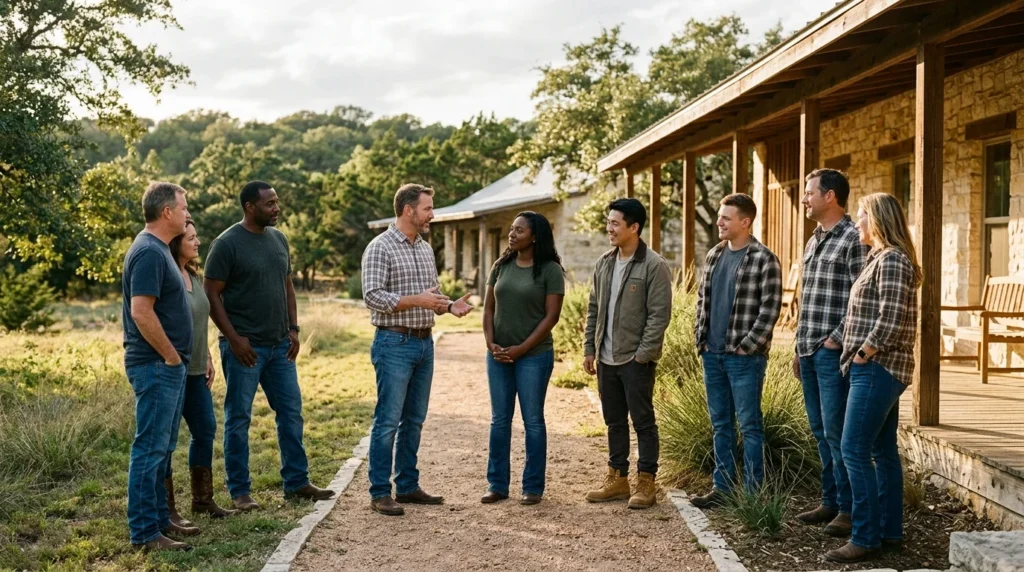
How companies tailor groups to Texas work rhythms
Texas employment patterns challenge typical treatment routines. Oilfield turnings, healthcare facility changes, long-haul trucking, and seasonal building and construction put people out of step with 9 to 5 care. Excellent programs map neighborhood sectors and schedule accordingly. In San Antonio, that might indicate morning groups for hospital personnel, with evening choices for service sector employees. Near refineries, programs might offer condensed weekend intensives that still meet evidence-based hour minimums. In agriculture-heavy locations, harvest period schedules require flexibility.
Technology helps. Asynchronous knowing modules do not replace online groups, but they reinforce skills when a person misses a day. Text-based accountability strings, regulated by a clinician, give day-to-day touch points without overwhelming staff.
The function of alumni and healing community
One marker of a healthy and balanced program is what happens after discharge. Graduates groups that meet weekly or month-to-month maintain individuals linked to a helpful identification. I have actually seen members return to share one challenging lesson they learned in the in 2014: the initial holiday, the first family wedding, the first birthday event without a beverage. Those stories instruct more recent members what to expect and how to prepare. In Texas, where neighborhood bonds run deep, graduates networks typically prolong right into job references, sober entertainment, and informal mentorships that bring even more weight than any type of brochure.
Recovery neighborhood companies intensify that effect. They host skills workshops, return to assistance, and, crucially, get-togethers that are in fact fun. https://ameblo.jp/shanermek478/entry-12981528896.html A Saturday early morning walking at Eisenhower Park, a bbq where the brisket is the star and the coolers teem with sparkling water, a Spurs see party where the loudest joy is for somebody's six month chip. Happiness is a relapse avoidance skill. Teams can and need to make area for it.
What success appears like from the facilitator's chair
When team therapy is functioning, you see functional changes. People start appearing on time, with a note pad. They call each various other out kindly when tales wander into war stories. They set details, dull goals that alter lives, like placing money in envelopes so payday does not vanish by Tuesday, or telling a bro, I will certainly not keep beer in your home anymore. Language shifts from always and never ever to often and following time. Dilemmas still happen. Yet the recover is much faster, and isolation loses its foothold.

I think of a daddy in his forties from the West Side who had actually cycled via two residential keeps. In an extensive outpatient group, he committed to chair a peer conference once a week and to text 2 group participants every early morning. The initial text took 10 seconds. Six months later on, he claimed, The group kept me inside the gate long enough for the rest to stick. It was not magic. It was uniformity, ability method, and people that recognized his youngsters' names.
Bringing it together
Addiction treatment, at its ideal, integrates science and neighborhood. In Texas, team treatment is the place where those fulfill. It respects the range of our state and the particularities of our individuals. It stretches limited resources without decreasing care to a lecture. It asks clients to step into susceptability, then shows them they can do hard points with others viewing and applauding. Whether you are evaluating addiction treatment in San Antonio, navigating court requirements in Bexar County, or visiting from a ranch home two areas over, a well-run team can anchor your recovery.
The recommendations I provide families and clients is straightforward. Look for programs that invest in their team facilitators, shield the container of the room, and adjust to Texas facts. Ask difficult questions. Sit in on a session if the program enables observers for orientation. Take notice of just how you really feel leaving the room. Hopeful and challenged is a great indicator. Drained pipes and puzzled is not.
Group treatment will certainly not resolve whatever. However in a state as big and varied as ours, it often does one of the most important work: transforming I into we, and we right into a plan that holds when life tries to knock it loose.